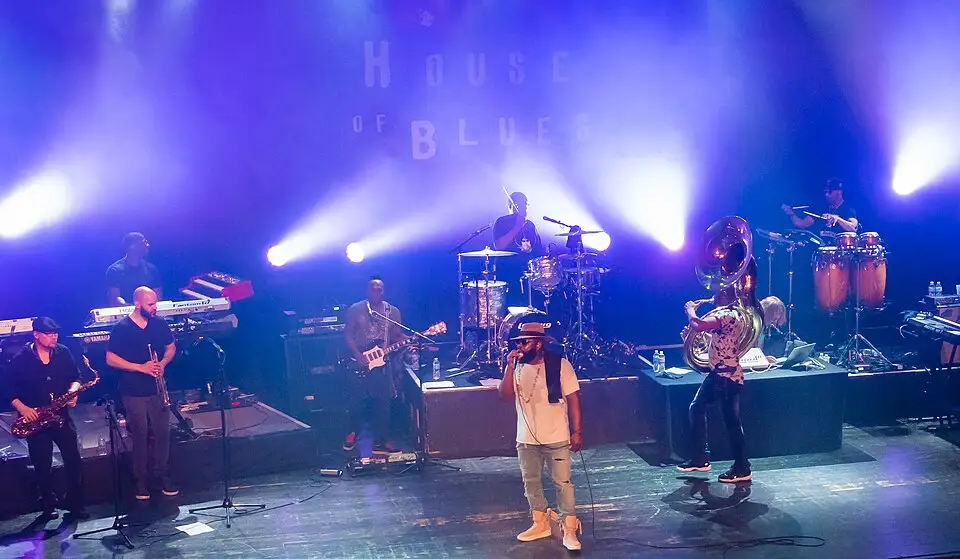
Picture a small live house somewhere in Japan — the kind of room where the ceiling is low, the PA is adequate rather than excellent, and the audience made a deliberate choice to be there. Not because an algorithm served them a recommendation, not because a major label bought a billboard, but because word traveled through a network of people who trust one another's taste. This is where Watson has always lived: in the infrastructure of belief, built person by person, release by release, across a body of work that now spans four albums, one EP, and a sustained run of singles functioning as their own ongoing conversation with listeners.
The Architecture of Independence: What It Means to Build Without a Blueprint
Japan's recorded music industry developed along lines that long made independence a structural challenge rather than simply a creative choice. The domestic market favored tightly controlled distribution networks, retail relationships with major chains, and a promotional apparatus oriented around television, radio, and the managed visibility that major labels could provide. For an artist to step outside that system was not merely to forego resources — it was to build an alternative set of logistical realities from the ground up.
What distinguishes Watson's path is precisely that it has never read as reactive. There is a meaningful difference between an artist who releases records and an artist who builds a discography — between someone responding to market windows and someone executing a long-term creative vision that accumulates meaning with each addition. Watson's output belongs firmly in the second category. The four albums, the EP, and the singles that have appeared between and around them are not a catalog assembled by circumstance. They are evidence of a sustained artistic will operating on its own timeline.
Independence in Japan also carries specific economic dimensions that differ substantially from Western markets. Physical media retains cultural weight here that it has largely lost elsewhere — limited pressings, fan club exclusives, and direct-to-audience sales remain meaningful channels, both financially and symbolically. These are not nostalgic gestures; they are functional infrastructure. Watson has understood this, treating the physical object as part of the artistic statement rather than a secondary afterthought to streaming availability.
Roots and Lineage: Where Watson Comes From
Every artist who builds independently does so from somewhere specific, and that somewhere shapes not just the sound but the logic of how they move through the world. Watson's creative environment — the venues, the peer networks, the local scenes that functioned as both audience and support system — provided something that no label contract could have replicated: a community that existed before the music became public, and that has remained connective tissue throughout.
The musical lineages running through Watson's work reflect a Japan in which rock, punk, and pop have long occupied the same conversation rather than strictly separate ones. Japanese independent rock has its own deep grammar, shaped by decades of domestic scene-building — from the noise experiments of the 1980s underground to the melodic precision of bands who found ways to make emotionally direct music without sacrificing complexity. Watson metabolizes these traditions rather than imitating them, producing something that carries the weight of lineage without being trapped by it.
The early recordings established thematic and aesthetic commitments that the later discography would develop rather than abandon. This is a significant marker of artistic seriousness: the artist who knows from the beginning what they are trying to say, even if the means of saying it will evolve. Watson's first releases were not tentative experiments but genuine statements — modest in production scale perhaps, but clear in intention. That clarity is what makes the full arc legible.
The Discography as Document: Four Albums, One EP, and What They Collectively Say
Reading Watson's four albums as a sequence rather than as individual objects reveals something that isolated listening cannot: the discography is a single sustained argument made across years and formats. Certain things shift across the arc — production density, tonal register, the proportion of space to sound — and those changes are not random. They mark the movement of an artist who is genuinely developing rather than executing variations on a successful formula.
The EP occupies a distinct creative role in this body of work. Where an album demands a kind of architectural commitment — every track in relationship to every other, a beginning and an end that mean something — an EP permits a different kind of freedom. It is a space for lateral movement, for exploring a question that doesn't yet need a full answer. Watson has used the format accordingly, treating it not as a stopgap between albums but as a genuinely different mode of address.
The singles have functioned as dispatches — proof of ongoing life, a direct line maintained between albums that keeps the relationship with listeners active without requiring the full weight of a long-form statement. This is a sophisticated understanding of how a discography can breathe. Each single lands in the context of everything Watson has already released, carrying that accumulated meaning even when heard in isolation. The production choices across these releases are audible as the texture of self-determination: decisions made because they were right for the work, not because a committee signed off on a direction.
Self-Determination as Practice: The Infrastructure Behind the Music
Artistic independence is not a philosophy that sustains itself — it is a practice built from concrete decisions made repeatedly under real constraints. Funding recordings without label advances, producing work without A&R oversight, managing distribution without access to major retail networks: these are not romantic abstractions. They are logistics, and Watson has navigated them in order to make four albums and counting on their own terms.
The direct relationship Watson has built with their audience is the economic and emotional core of that independence. In a market where fan engagement culture — limited physical editions, fan club memberships, direct purchase relationships — remains a genuine force, this is not merely a philosophical position but a functional model. The audience is not a passive consumer base reached through intermediaries; it is a community that participates in sustaining the work through direct engagement with it.
Independence also carries trade-offs worth naming honestly. The absence of institutional support means slower reach, greater logistical burden, and the constant negotiation between creative ambition and practical capacity. Watson's discography is evidence that these trade-offs can be navigated — but that navigation is labor, not luck. The freedom to control artwork, sequencing, release timing, and the entire shape of how music enters the world comes at the cost of doing the work that institutions would otherwise absorb.
What the Gatekeepers Could Not Give: Artistic Sovereignty and Its Rewards
There is a quality to the audience relationship that independent artists build which is structurally different from what label promotion produces. When listeners find Watson not through an industry push but through recommendation, through scene proximity, through the slow accumulation of trust built across multiple releases, the relationship they form is categorically different. It is not the passive recognition of a promoted name but an active investment in an artist whose work they have chosen to follow over time.
What a conventional industry path could not have given Watson is the coherence visible in their full discography — the sense that every release is an expression of the same persistent artistic intelligence rather than a managed persona pivoting to market conditions. Label-directed careers are not incapable of producing great art, but they operate under pressures that frequently pull toward legibility over depth, toward the repeatable formula over the genuinely risky next step. Watson's discography shows the shape of development unbent by those pressures.
Cultural credibility built through a body of work without compromise compounds in ways that chart positions and streaming metrics cannot measure. An artist who has made four albums that mean something to a dedicated audience has something no single viral moment can provide: a foundation. The weight of Watson's discography is not the weight of popularity. It is the weight of accumulated trust, and that is a different — and more durable — thing.
The Ongoing Work: A Discography Still Being Written
A discography of four albums and one EP is not a completed monument — it is a foundation from which every subsequent release will be read. This is one of the structural advantages that sustained output creates: context. When Watson releases the next record, it will arrive into a listening environment already shaped by everything that has come before. The audience will bring accumulated experience to it; critics will read it against an established arc. That is a very different reception condition from releasing a debut into silence.
The community dimension of this ongoing practice matters as much as the recordings themselves. The listeners, collaborators, and peers whose relationship to Watson's music has deepened across years of releases are themselves a kind of infrastructure — a network that exists outside the promotional cycles of the mainstream industry and persists because it is built on something other than manufactured visibility. That network is what makes independence viable over the long term.
In a landscape where the gatekeepers' monopoly on access and visibility has genuinely eroded — where distribution no longer requires a major label's blessing and audiences can find music through channels the industry does not control — the artists who build deliberately and on their own terms are the ones whose work accumulates meaning rather than evaporating after a promotional cycle ends. Watson has understood this not as a theory but as a practice, enacted across years and formats and releases.
What Watson's discography represents, finally, is a way of believing in music and acting on that belief over time. Not the belief that any single record will change everything, but the belief that the work itself — accumulated, coherent, made without compromise — is worth doing for the long haul. In Japan's independent music ecosystem, and in the broader global story of artists who have chosen sovereignty over convenience, that is a rare and significant kind of faith. It produces a rare and significant kind of legacy.
Share this Article
Jisajili kwa jarida letu
Stay connected with the latest in music, culture, and exclusive content
Kwa kujisajili, unakubali Sera ya Faragha na Masharti ya Matumizi