Waar Los Angeles Eindigt en de Zomer Begint
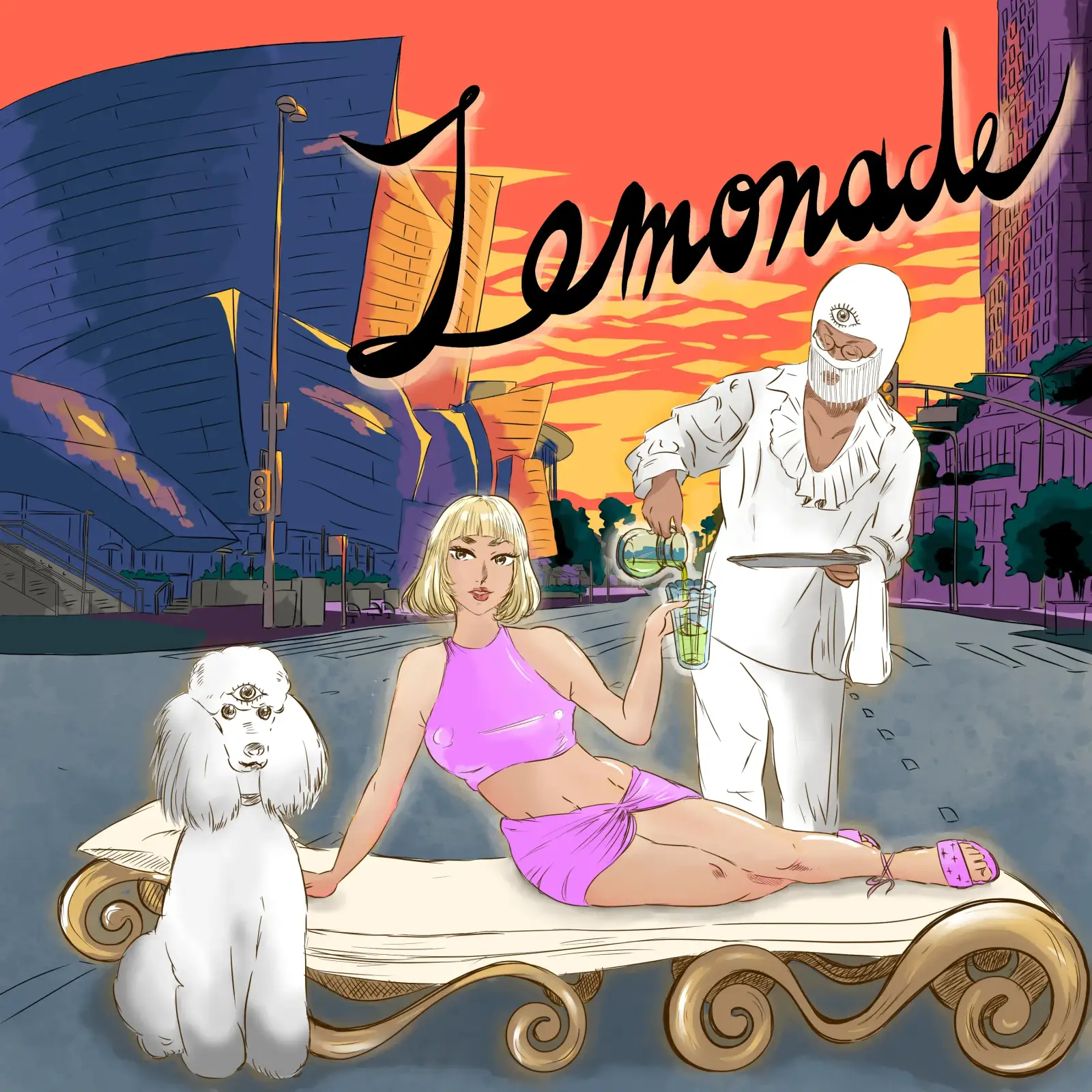
Er is een bijzondere kwaliteit aan het licht van Los Angeles laat in het seizoen — de manier waarop de oktoberzon haar warmte nog vasthoudt in het asfalt, de manier waarop auto's langzaam rijden met muziek die uit open ramen waait, de manier waarop een stad van miljoenen zich, even, kan voelen als een tuinfeest dat vergeten is te eindigen. "Lemonade" van Ruby Mountain is geboren in precies die opgeschorte tijd. Het begon niet tijdens een opnamesessie met een deadline. Het begon met een zin die hardop werd gezongen in de Venus-studio — "Sittin' in sunshine with my Lemonade" — en groeide zoals alleen muziek die in gemeenschap wordt gemaakt kan groeien.
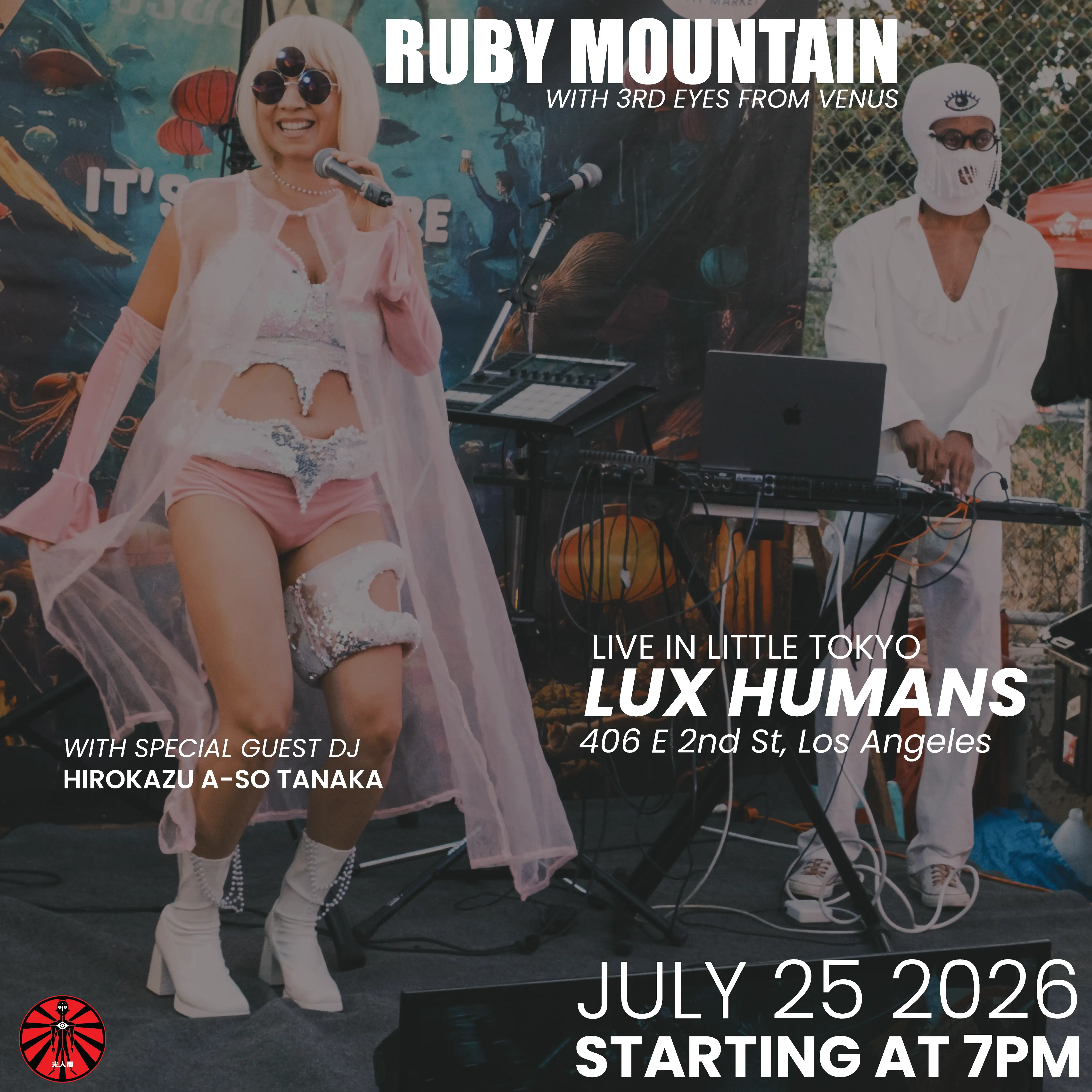
De Venus studio is de thuisbasis van Ruby Mountain en de 3rd Eyes from Venus, een creatief collectief dat minder als begeleidingsband fungeert dan als een levend laboratorium. De vroegste vorm van het nummer ontstond niet in isolatie maar door middel van optredens — beats gebouwd op het podium, publieksreacties in real time afgelezen, de architectuur van het nummer herzien bij elke show totdat het zijn eigen logica had gevonden. Dat proces is zeldzaam. Het is ook hoorbaar in het afgewerkte werk, dat de soepelheid draagt van iets wat geleefd is geworden in plaats van samengesteld.
Twee medewerkers bleken essentieel voor de definitieve vorm van het nummer. Ism, een rapper uit South Central wiens lyrische sensibiliteit Ruby Mountain omschrijft als aansluitend bij een "buitenaardse vibe", bracht aardende specificiteit naar het meer expansieve emotionele register van het nummer. Mixingenieur Jeff Jackson introduceerde technieken die de sonische ruimte openlegden — grotere drums, helderdere vocals, meer ruimte voor het nummer om te ademen. Los Angeles is al lang een stad waar genregrenzen vervagen en oplossen onder de druk van geografie en culturele botsing, en "Lemonade" is een direct product van die traditie.
Drums, licht en de architectuur van een feel-good plaat
In zijn kern is "Lemonade" een drum-'n-basstrack — kinetisch, voortstuwend, gebouwd op ritmische momentum. Maar de productiebenadering verzacht de hardere kanten van het genre met hiphopkadansen en een helderheid die vaker geassocieerd wordt met de emotionele directheid van pop. Het resultaat is een plaat die snel beweegt zonder ooit agressief aan te voelen, die het lichaam vooruitduwt terwijl de geest warm blijft.
Jeff Jacksons bijdrage als mixer markeert het meest uitgesproken kantelpunt in de evolutie van het nummer. Het bewust uitbreiden van de aanwezigheid van de bastrommel en het helderder maken van het vocale register gaf "Lemonade" een gevoel van openheid dat het onderscheidt van de meer claustrofobische uithoeken van het genre. Waar drum-'n-bass soms gesloten en onder druk gezet kan aanvoelen, ademt dit nummer. De stem van Ruby Mountain staat centraal met een warmte en een gemak die de luisteraar verankert, zelfs terwijl de ritmesectie daaronder versnelt.
Ism's rap verses slot into the drum and bass framework with a density and groundedness that prevents the track from floating free of its roots. His South Central perspective adds lyrical weight without disrupting the buoyant atmosphere — a difficult balance that the best genre-blending music achieves almost invisibly. The sonic reference points are legible: PinkPantheress and Nia Archives have each demonstrated that drum and bass can carry genuine melodic and emotional richness rather than functioning purely as a vehicle for dancefloor utility. Ruby Mountain absorbs that lesson and relocates it firmly in Los Angeles.
Ease, Warmth, and the Texture of a City That Never Quite Cools Down
"Sittin' in sunshine with my Lemonade" is a deceptively simple lyric. It contains almost nothing in the way of narrative complexity or verbal acrobatics, and yet it holds an enormous amount — unhurried pleasure, physical presence, the specific warmth of a city that resists seasonal endings. Ruby Mountain has spoken about Los Angeles as a place where fall arrives on the calendar while the city continues to radiate summer heat, and that image — the calendar wrong, the body right — is precisely what the track embodies.
The duality of Los Angeles runs through "Lemonade" as a thematic throughline: rooftop parties and backyard jams, skyline luxury and neighborhood intimacy, glamour and rawness held in the same breath. What matters is that the track does not resolve this tension or choose a side. It simply holds both, the way the city itself holds both, without irony or apology. Ism's verses are essential here — they carry a South Central specificity that keeps the track from drifting into abstraction, reminding the listener that the sunshine in question falls on particular streets inhabited by particular people.
The decision to make a feel-good record is not a small one. Joy-making in music rooted in a city that carries as much struggle as it does sunlight is an intentional act, a refusal to let difficulty define the entire story. "Lemonade" does not pretend the struggle is absent — it chooses to dwell, with full awareness, in the warmth that exists alongside it.
Drum and Bass as a Language for Los Angeles
Drum and bass emerged from British club culture — London and Bristol in the early 1990s, jungle nights and pirate radio, a sonic world shaped by the specific pressures of postindustrial UK cities. Its transatlantic journey has been gradual and rarely linear, and the question of what it sounds like planted in Los Angeles soil is one that "Lemonade" answers with genuine conviction. Ruby Mountain is not performing an imported genre; the track translates drum and bass through the city's own musical DNA.
Los Angeles has its own complex relationship with bass music and club culture — from the lowrider tradition's love of deep, resonant frequencies to West Coast hip hop's foundational role in shaping how rhythm and community interact. Artists like PinkPantheress and Nia Archives reintroduced drum and bass's emotional range to younger global audiences by emphasizing its melodic and sentimental possibilities. Ruby Mountain participates in that ongoing reinterpretation while rooting it in something specifically local: the Venus studio, the block party tradition, the backyard jam as a site of genuine musical development.
Ism's presence carries its own cultural significance. South Central has produced some of the most consequential music in American history, and his inclusion here is a reminder that Los Angeles is not a monolith. The most resonant work made in this city tends to emerge from the collision of its many distinct neighborhoods and communities, and "Lemonade" is a product of exactly that collision — drum and bass from across the Atlantic, hip hop from the south side, soul from somewhere harder to map.
What "Lemonade" Holds Over Time
The tracks that endure are rarely the ones built to chase a moment. They are the ones in which a feeling has been captured so precisely that the feeling outlasts the context — records a listener discovers years later and finds, somehow, have arrived exactly on time. "Lemonade" was built slowly: from a spontaneous lyric in a studio jam, through live performance and audience feedback, through collaboration and revision, into a final recorded form. That process is legible in every layer of the finished track.
Music built around joy, ease, and human warmth tends to age well precisely because it is not anchored to a specific cultural anxiety. It is anchored to something more fundamental — the experience of stillness in sunlight, of bodies moving together, of a city that insists on its own warmth even when the season says otherwise. Ruby Mountain's collaborative model, built through the 3rd Eyes from Venus, Ism, and Jeff Jackson, gives the work roots beyond any single creative vision. This is not a solo project dressed as a community; it is genuinely communal work, and that gives it resilience.
Los Angeles has a long history of producing music that defines summer feeling for audiences far beyond its own borders — from the Beach Boys' coastal harmonies through to the golden era of West Coast hip hop. Ruby Mountain enters that lineage through a new genre lens, demonstrating that drum and bass can be made warm, place-specific, and emotionally generous. What "Lemonade" ultimately offers — to future listeners and future artists — is a template: kinetic energy put in service of connection rather than simply movement, a genre transplanted and transformed by the light of a city that refuses to let summer end.
Share this Article
Schrijf je in voor onze nieuwsbrief
Stay connected with the latest in music, culture, and exclusive content
Door je in te schrijven ga je akkoord met onze Privacyverklaring en Gebruiksvoorwaarden