Where Los Angeles Ends and Summer Begins
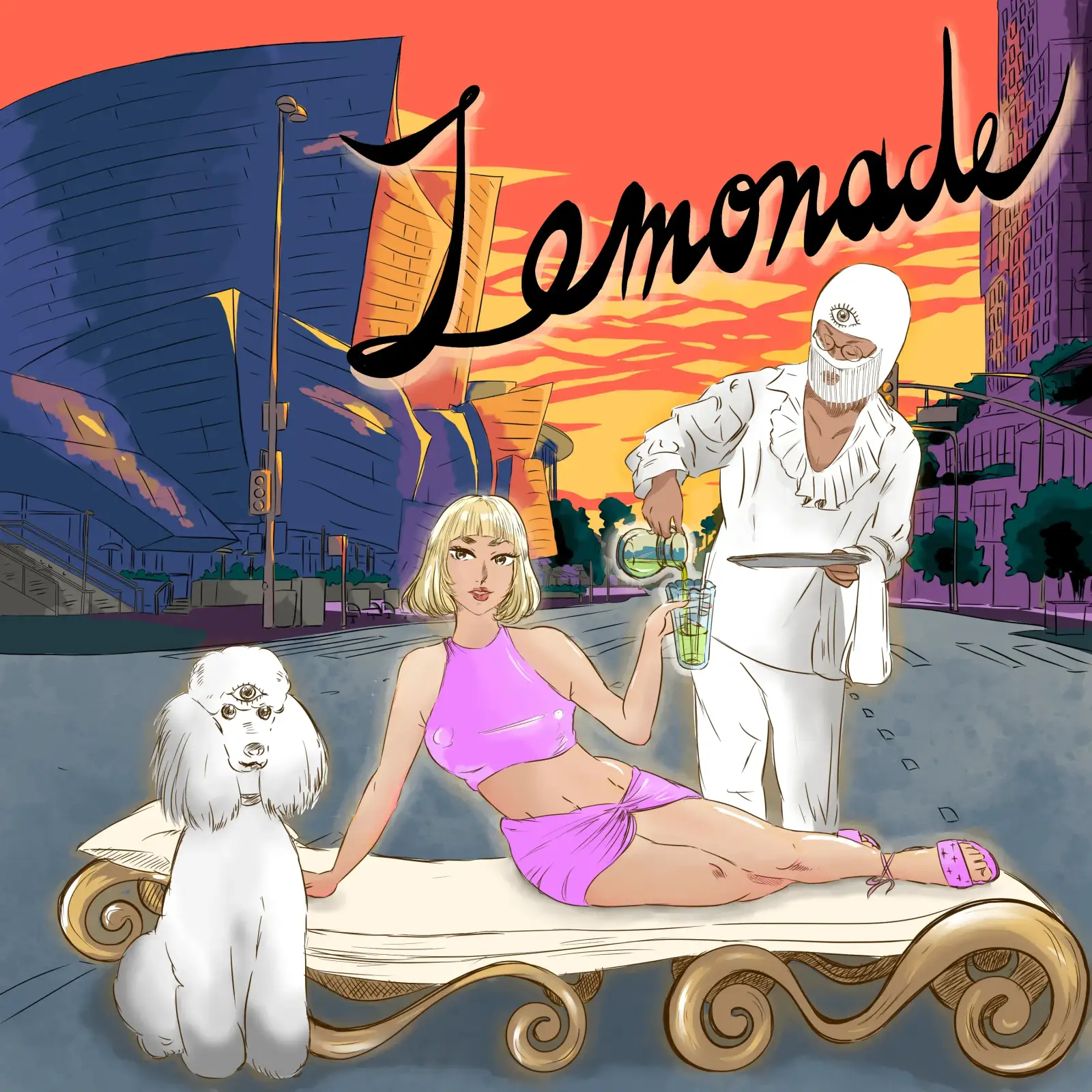
There is a particular quality to late-season Los Angeles light — the way October sun still holds heat in the pavement, the way cars move slowly with music trailing out of open windows, the way a city of millions can feel, for a moment, like a backyard gathering that forgot to end. "Lemonade" by Ruby Mountain was born in exactly that suspended time. It did not begin in a recording session with a deadline. It began with a line sung aloud in the Venus studio — "Sittin' in sunshine with my Lemonade" — and grew the way only music made in community can grow.
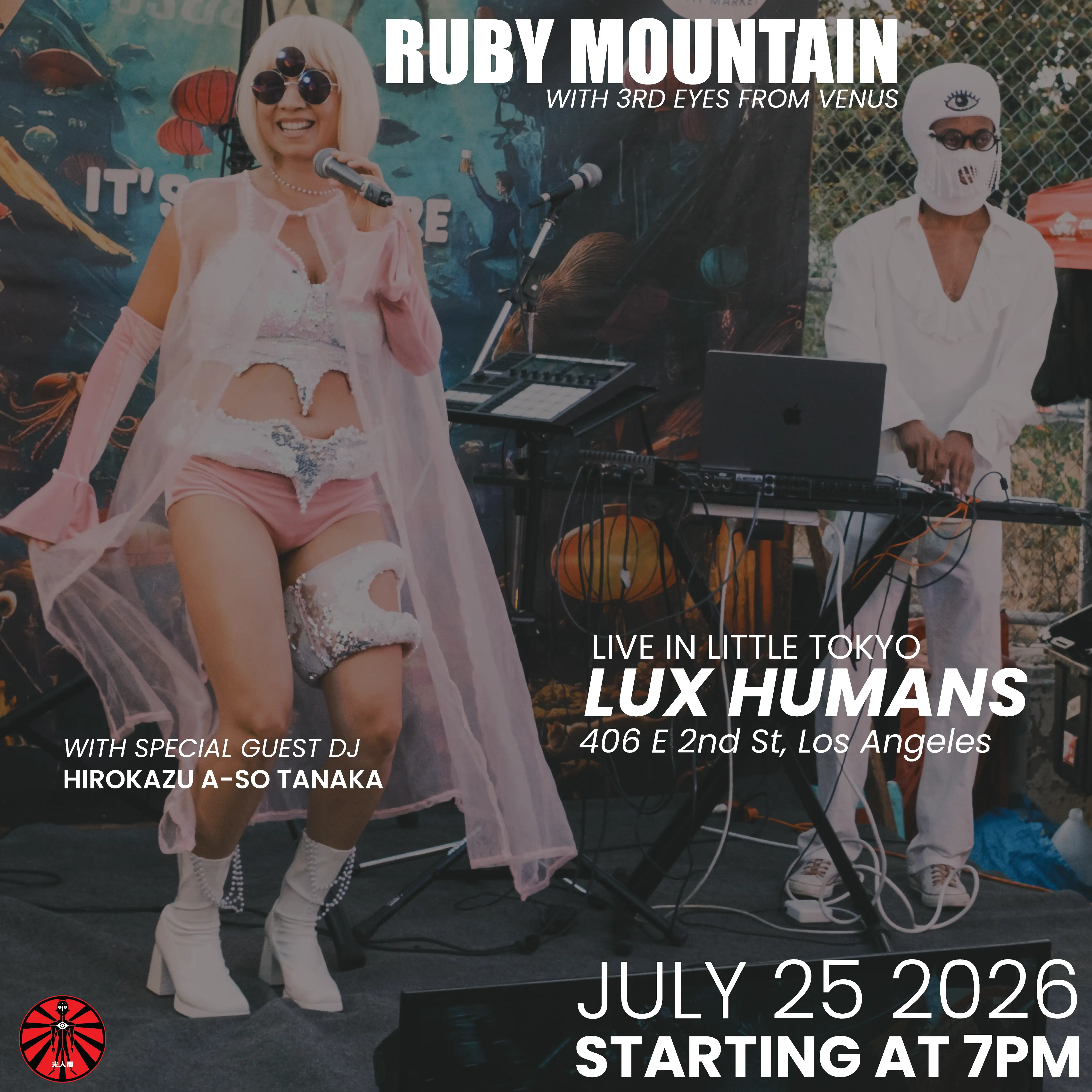
The Venus studio is home base for Ruby Mountain and the 3rd Eyes from Venus, a creative collective that functions less as a backing band than as a living laboratory. The track's earliest form was shaped not in isolation but through performance — beats built onstage, crowd reactions read in real time, the song's architecture revised with each show until it had found its own logic. That process is rare. It is also audible in the finished work, which carries the ease of something that has been lived into rather than assembled.
Two collaborators proved essential to the track's final form. Ism, a rapper from South Central whose lyrical sensibility Ruby Mountain describes as aligned with an "otherworldly vibe," brought grounding specificity to the track's more expansive emotional register. Mixing engineer Jeff Jackson introduced techniques that opened up the sonic space — bigger drums, brighter vocals, more room for the song to breathe. Los Angeles has long been a city where genre lines blur and dissolve under the pressure of geography and cultural collision, and "Lemonade" is a direct product of that tradition.
Drums, Light, and the Architecture of a Feel-Good Record
At its foundation, "Lemonade" is a drum and bass track — kinetic, propulsive, built on rhythmic momentum. But its production philosophy softens the genre's harder edges with hip hop cadences and a brightness more commonly associated with pop's emotional directness. The result is a record that moves fast without ever feeling aggressive, that pushes the body forward while keeping the spirit warm.
Jeff Jackson's mixing contribution marks the clearest single turning point in the track's evolution. Deliberately expanding the low-end drum presence and brightening the vocal register gave "Lemonade" a sense of open space that distinguishes it from the more claustrophobic reaches of the genre. Where drum and bass can sometimes feel sealed and pressurized, this track breathes. Ruby Mountain's voice sits at its center with a warmth and ease that anchors the listener even as the rhythm section accelerates beneath.
Ism's rap verses slot into the drum and bass framework with a density and groundedness that prevents the track from floating free of its roots. His South Central perspective adds lyrical weight without disrupting the buoyant atmosphere — a difficult balance that the best genre-blending music achieves almost invisibly. The sonic reference points are legible: PinkPantheress and Nia Archives have each demonstrated that drum and bass can carry genuine melodic and emotional richness rather than functioning purely as a vehicle for dancefloor utility. Ruby Mountain absorbs that lesson and relocates it firmly in Los Angeles.
Ease, Warmth, and the Texture of a City That Never Quite Cools Down
"Sittin' in sunshine with my Lemonade" is a deceptively simple lyric. It contains almost nothing in the way of narrative complexity or verbal acrobatics, and yet it holds an enormous amount — unhurried pleasure, physical presence, the specific warmth of a city that resists seasonal endings. Ruby Mountain has spoken about Los Angeles as a place where fall arrives on the calendar while the city continues to radiate summer heat, and that image — the calendar wrong, the body right — is precisely what the track embodies.
The duality of Los Angeles runs through "Lemonade" as a thematic throughline: rooftop parties and backyard jams, skyline luxury and neighborhood intimacy, glamour and rawness held in the same breath. What matters is that the track does not resolve this tension or choose a side. It simply holds both, the way the city itself holds both, without irony or apology. Ism's verses are essential here — they carry a South Central specificity that keeps the track from drifting into abstraction, reminding the listener that the sunshine in question falls on particular streets inhabited by particular people.
The decision to make a feel-good record is not a small one. Joy-making in music rooted in a city that carries as much struggle as it does sunlight is an intentional act, a refusal to let difficulty define the entire story. "Lemonade" does not pretend the struggle is absent — it chooses to dwell, with full awareness, in the warmth that exists alongside it.
Drum and Bass as a Language for Los Angeles
Drum and bass emerged from British club culture — London and Bristol in the early 1990s, jungle nights and pirate radio, a sonic world shaped by the specific pressures of postindustrial UK cities. Its transatlantic journey has been gradual and rarely linear, and the question of what it sounds like planted in Los Angeles soil is one that "Lemonade" answers with genuine conviction. Ruby Mountain is not performing an imported genre; the track translates drum and bass through the city's own musical DNA.
Los Angeles has its own complex relationship with bass music and club culture — from the lowrider tradition's love of deep, resonant frequencies to West Coast hip hop's foundational role in shaping how rhythm and community interact. Artists like PinkPantheress and Nia Archives reintroduced drum and bass's emotional range to younger global audiences by emphasizing its melodic and sentimental possibilities. Ruby Mountain participates in that ongoing reinterpretation while rooting it in something specifically local: the Venus studio, the block party tradition, the backyard jam as a site of genuine musical development.
Ism's presence carries its own cultural significance. South Central has produced some of the most consequential music in American history, and his inclusion here is a reminder that Los Angeles is not a monolith. The most resonant work made in this city tends to emerge from the collision of its many distinct neighborhoods and communities, and "Lemonade" is a product of exactly that collision — drum and bass from across the Atlantic, hip hop from the south side, soul from somewhere harder to map.
What "Lemonade" Holds Over Time
The tracks that endure are rarely the ones built to chase a moment. They are the ones in which a feeling has been captured so precisely that the feeling outlasts the context — records a listener discovers years later and finds, somehow, have arrived exactly on time. "Lemonade" was built slowly: from a spontaneous lyric in a studio jam, through live performance and audience feedback, through collaboration and revision, into a final recorded form. That process is legible in every layer of the finished track.
Music built around joy, ease, and human warmth tends to age well precisely because it is not anchored to a specific cultural anxiety. It is anchored to something more fundamental — the experience of stillness in sunlight, of bodies moving together, of a city that insists on its own warmth even when the season says otherwise. Ruby Mountain's collaborative model, built through the 3rd Eyes from Venus, Ism, and Jeff Jackson, gives the work roots beyond any single creative vision. This is not a solo project dressed as a community; it is genuinely communal work, and that gives it resilience.
Los Angeles has a long history of producing music that defines summer feeling for audiences far beyond its own borders — from the Beach Boys' coastal harmonies through to the golden era of West Coast hip hop. Ruby Mountain enters that lineage through a new genre lens, demonstrating that drum and bass can be made warm, place-specific, and emotionally generous. What "Lemonade" ultimately offers — to future listeners and future artists — is a template: kinetic energy put in service of connection rather than simply movement, a genre transplanted and transformed by the light of a city that refuses to let summer end.
Share this Article
Subscribe to our Newsletter
Stay connected with the latest in music, culture, and exclusive content
By subscribing, you agree to our Privacy Policy and Terms of Use